
Forklift Battery Charger: Diagnose the Charging System Before Buying
Matching the nominal battery voltage is not enough. The battery chemistry and BMS, permitted charging range, connector and pin allocation, communication protocol, output current and the site AC supply must all agree.
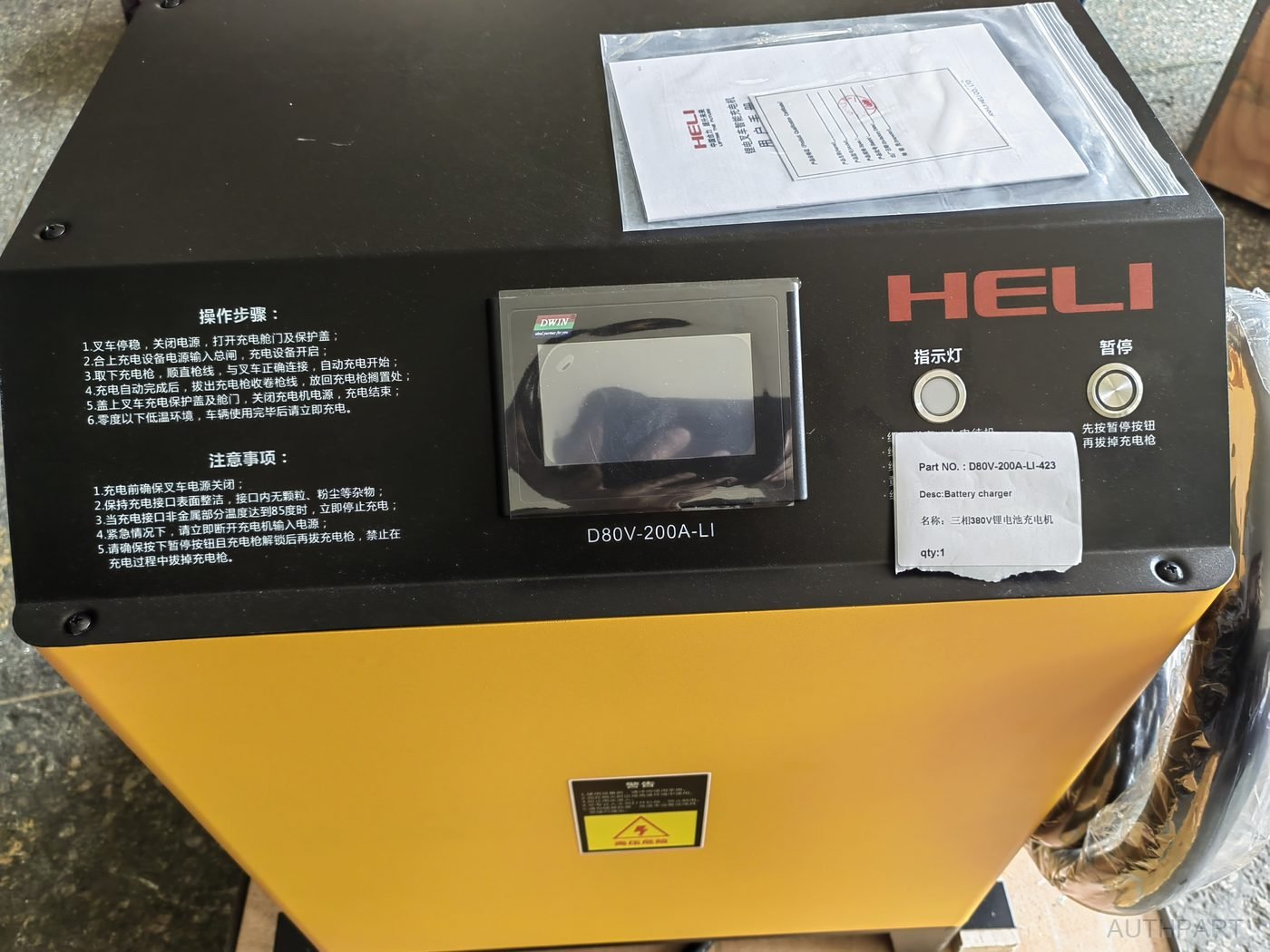
Confirm battery voltage range, BMS communication, connector and available AC supply.
Request this charger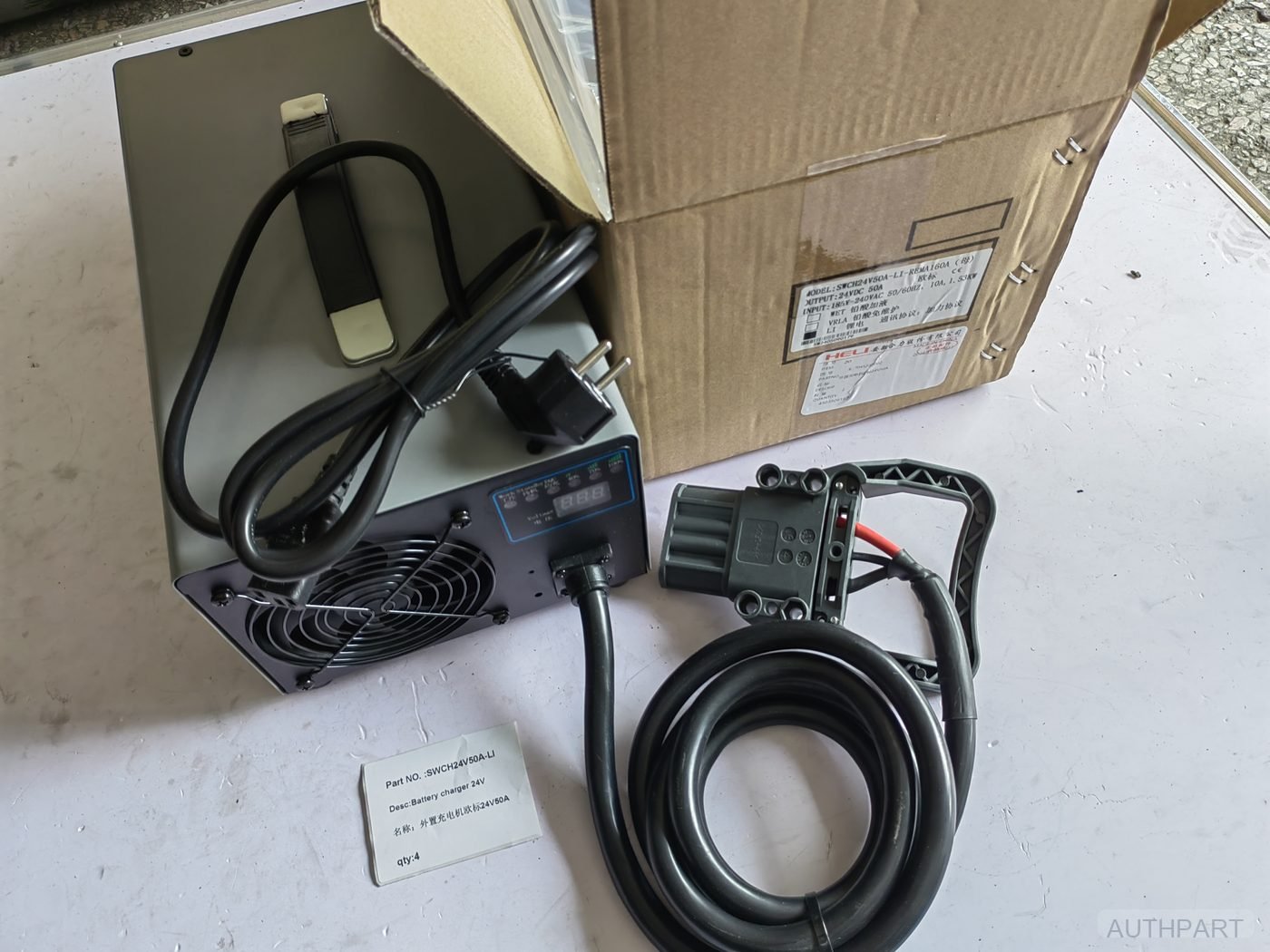
Confirm battery chemistry, BMS requirements, charging connector and polarity.
Request this chargerImportant Compatibility Reminder
Do not order a forklift charger from voltage alone. A 24V, 48V, 72V or 80V label identifies the nominal battery system, but it does not confirm that the charger can communicate with or charge that battery safely.
Before quotation, confirm the following details from the battery and charger nameplates:
- Battery chemistry: lead-acid or lithium
- Nominal voltage and permitted charging-voltage range
- Battery capacity in Ah and required charging current
- Required charging curve or manufacturer protocol
- BMS brand, model and software/parameter version
- CAN or other communication requirement
- DC connector, pin layout and polarity
- AC input voltage, phase and frequency
- Truck and battery model
- Indoor, outdoor and ambient-temperature conditions
For lithium batteries: if the BMS handshake, CAN protocol or charging parameters do not agree, the charger may refuse to start, stop unexpectedly or create a battery-protection fault—even when the nominal voltage is the same.
Fault reported
No charge, charging stops early, repeated charger alarms, overheating, a damaged connector or unexpectedly short operating time may come from the charger, battery, BMS, cable, connector or site power.
Confirm the fault
Record every alarm and the point in the charging cycle. Check AC input, protective earth, connector condition, polarity, cable temperature, battery voltage, BMS status and communication. Do not assume the charger is defective before the battery system is checked.
Identify the required charger
Send the charger and battery nameplates, truck model and serial number, battery chemistry and capacity, both connector faces, CAN or other communication information, and the actual site voltage, phase and frequency.
Choose the supply level
A genuine or manufacturer-approved charger is preferred when BMS communication, charging limits or firmware cannot be fully documented. A replacement charger is practical only when the full electrical and communication interface is verified.
Compare the same scope
Compare the same output range and current, communication, connector and cable, input-voltage arrangement, plug, installation condition, warranty and commissioning support. A charger price without this scope is not a meaningful comparison.
Confirm before dispatch
We record the actual charger model, nameplate, connector, cables and quoted electrical specification against the approved battery and site information before shipment.
| Interface | What must match |
|---|---|
| Battery | Chemistry, rated and permitted voltage, capacity, BMS and charging limits |
| DC output | Voltage range, current, connector, pin allocation, polarity and auxiliary contacts |
| Communication | CAN or other protocol, wiring and permitted charger-battery handshake |
| AC input | Voltage, phase, frequency, protective earth, plug or hard-wired arrangement |
| Supply scope | Charger, input/output cables, connector, plug, manuals, warranty and commissioning requirement |
Send the battery and charger labels together
Include connector photos, truck information, site input power, current fault or alarm and required quantity.
24V, 48V, 72V or 80V: What the Charger Voltage Really Means
A forklift described as 24V or 80V uses a nominal battery-system voltage. That number narrows the charger category, but it does not confirm a safe match. The charger must follow the battery manufacturer’s permitted charging-voltage range and communicate correctly with the battery management system where required.
Common on pallet trucks, stackers and other lower-voltage warehouse equipment. Battery chemistry, capacity, connector and charging current still vary.
Used across many electric counterbalance and warehouse trucks. Do not assume two 48V chargers share the same output profile or communication.
Found on some higher-output electric forklifts. Verify the actual battery nameplate because 72V and 80V equipment must not be treated as one category.
Common on larger electric counterbalance forklifts. High charging current increases the importance of connector rating, cable size, ventilation and BMS control.
| Information to check | Why it changes the charger |
|---|---|
| Battery nameplate and chemistry | Defines the permitted charging profile and maximum voltage. |
| Battery capacity in Ah | Affects suitable charging current and expected charging time. |
| BMS brand and communication | Some lithium systems will not charge safely without the correct CAN protocol and control logic. |
| DC connector and pin allocation | Mechanical fit alone does not confirm polarity, auxiliary pins or communication wiring. |
| Site AC supply | Confirm voltage, phase and frequency—such as single-phase 220V or three-phase 380V—before selecting the charger input. |
| Operating environment | Temperature, ventilation, dust, moisture and charging location affect enclosure and cooling requirements. |
Send both nameplates—not voltage alone
Provide the charger label, battery label, both connector faces, forklift model, site AC supply and any BMS or CAN information.
Verified forklift replacement part
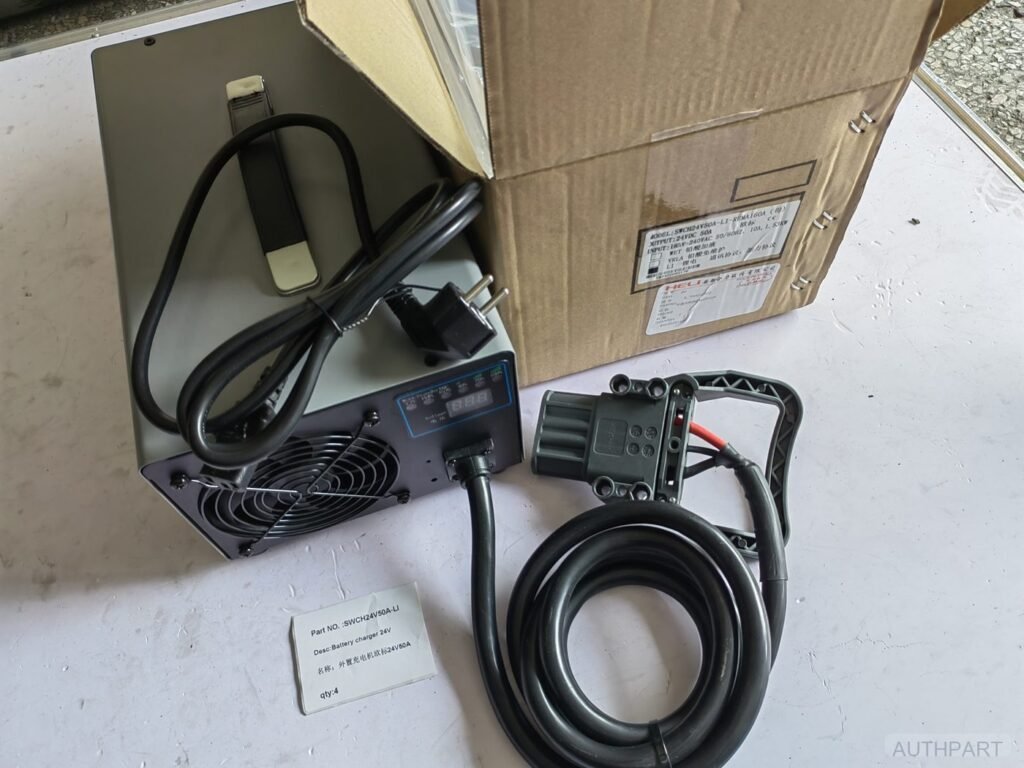
HELI 24V 50A Lithium Battery Charger — SWCH24V50A-LI
24V 50A Lithium Forklift Battery Charger reference SWCH24V50A-LI is shown with a real product photo so the physical part can be checked before an order.
The available label identifies SWCH24V50A-LI as a 24VDC / 50A charger with 185–240VAC 50/60Hz input. The battery connector, polarity and communication arrangement still need to match.
Verify This Part for My ForkliftProduct overview
| Product | 24V 50A Lithium Forklift Battery Charger |
|---|---|
| Reference / specification | SWCH24V50A-LI |
| System | Forklift battery charging system |
| Supply option | Genuine or suitable OEM option stated clearly after verification. |
| Application | Confirmed from the truck, component and available reference information. |
Why this component needs a careful match
The available label identifies SWCH24V50A-LI as a 24VDC / 50A charger with 185–240VAC 50/60Hz input. The battery connector, polarity and communication arrangement still need to match.
What must match
24V alone does not identify the connector or charging protocol.
Why it matters
Lithium battery communication and polarity must be correct.
How we reduce risk
We state the verified label information and flag anything that still needs confirmation.
What to send for an accurate quote
You do not need a perfect request. Send what you have; we will identify the next useful check.
- Battery nameplate and battery type
- Charger label and output connector
- Available AC input and plug requirement
Confirm SWCH24V50A-LI before you order
Send the reference, truck model or clear product photos. Authpart will check the details and explain the proposed supply option clearly.
Request a Verified Quote