Forklift High-Pressure Hose: Diagnose the Leak Before Replacing the Hose
A hydraulic hose is selected by circuit duty, pressure rating, hose size, end fittings, bend orientation and installed length. A similar-looking hose can leak, twist or fail early when any one of these details is wrong.
Fault reported
Oil mist, wet fittings, a cracked cover, a swollen section or slower hydraulic movement may indicate hose damage. Oil on the hose can also come from a nearby valve, cylinder, tube or fitting.
Confirm the leak source
Clean the area and inspect it under controlled pressure without placing hands near the leak. Check the fitting seat, adapter, tube and hose crimp before condemning the hose.
Identify the required hose
Record the hose marking, overall length, inside diameter, fitting type, thread, seal face, fitting angle and clocking. The truck model and installation position help confirm the hydraulic circuit.
Choose the supply level
Use a hose assembly with documented pressure and temperature suitability. Safety-critical lifting and steering circuits should not rely on an untraceable assembly selected only by appearance.
Compare the same scope
Confirm whether adapters, protective sleeve, clamps and seals are included, and whether the quoted length is measured between fitting centres or end to end.
Confirm before dispatch
We compare the part reference, hose marking, fitting geometry and installed routing with the approved information before preparing the shipment.
| Check | Required detail | Reason |
|---|---|---|
| Hose body | Marking, inside diameter, pressure class and length | Defines flow capacity and operating duty. |
| End fittings | Thread, sealing face, size and angle | Prevents leakage or connection damage. |
| Orientation | Clocking between angled fittings | Avoids twist during installation. |
| Protection | Sleeve, abrasion guard and clamp position | Reduces rubbing and premature failure. |
Send the old hose and installation evidence
Include full hose photos, both fitting ends, hose marking, overall length, forklift model and installation position.
Forklift high-pressure hoses: diagnose the leak and specify the hose correctly
1. Confirm the reported fault
Clean the area and determine whether the leak is from the hose, crimp, fitting, valve or cylinder. Record operating pressure and the movement that causes rubbing or twisting.
2. Identify the exact reference
Check the truck brand, model, serial number, complete part number, nameplate and clear photos of the old part and its connections. Similar-looking components are not assumed interchangeable.
3. Inspect the related system
Inspect clamps, guards, bend radius, abrasion, heat, torsion and routing at every service. Replace damaged hoses before reinforcement is exposed or the cover blisters. Never inspect a suspected pinhole leak with bare hands.
4. Select the supply option
A verified industrial hose assembly can be more economical than an original labelled hose when the complete specification and ends are known. Critical lifting circuits still require documented pressure and quality control.
Review forklift hydraulic parts
Request part verificationVerified forklift replacement part
Forklift High-Pressure Hose — Part No. Z7804-19040
Forklift High-Pressure Hose reference Z7804-19040 is shown with a real product photo so the physical part can be checked before an order.
A high-pressure hose must match length, inside diameter, end fittings, bend direction and pressure duty. The Z7804-19040 reference is checked with the visible hose ends and installation position before quotation.
Verify This Part for My Forklift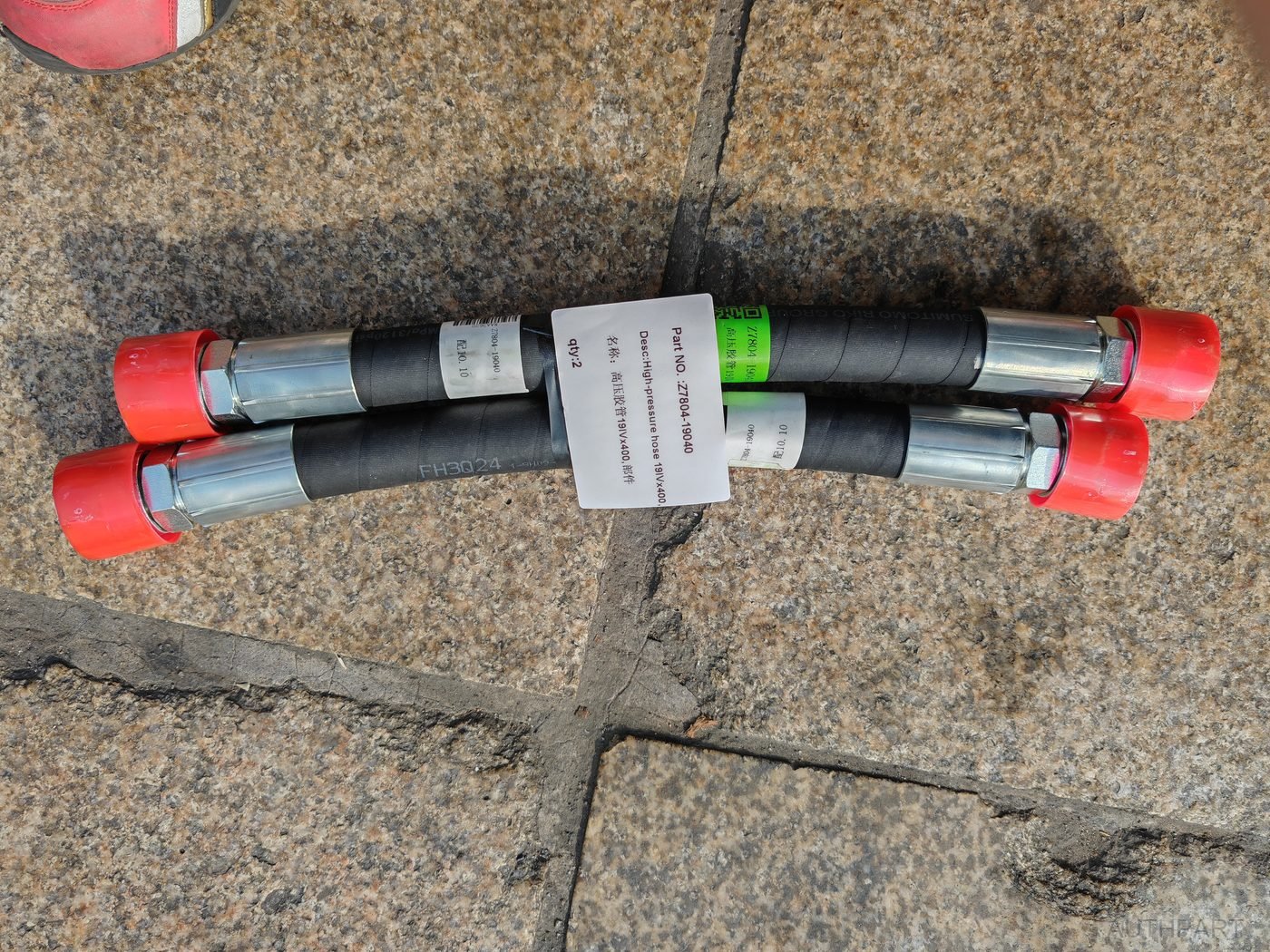
Important high-pressure hose reminder
Never inspect a suspected pinhole leak with a hand. High-pressure oil can penetrate skin. Stop the truck, lower the attachment, release stored pressure and have a qualified technician locate the leak safely.
- Match inside diameter, pressure rating, temperature range, hose length and minimum bend radius.
- Confirm both end fittings, thread and seal type, fitting angles, clocking and installed routing.
- Replace a hose with exposed reinforcement, blistering, crushed sections, hardened cover or damaged fittings.
- After installation, check for twisting, rubbing, tight bends and interference through the full mast movement.
Product overview
| Product | Forklift High-Pressure Hose |
|---|---|
| Reference / specification | Z7804-19040 |
| System | Forklift hydraulic system |
| Supply option | Genuine or suitable OEM option stated clearly after verification. |
| Application | Confirmed from the truck, component and available reference information. |
Why this component needs a careful match
A high-pressure hose must match length, inside diameter, end fittings, bend direction and pressure duty. The Z7804-19040 reference is checked with the visible hose ends and installation position before quotation.
What must match
A hose that is only the right length can still have the wrong fittings or bend direction.
Why it matters
Thread and sealing details determine whether the hose can be installed without leaks.
How we reduce risk
We verify the physical interface and the reference together.
What to send for an accurate quote
You do not need a perfect request. Send what you have; we will identify the next useful check.
- Truck model and hose reference
- End-fitting and thread photos
- Length, diameter and installation position
Confirm Z7804-19040 before you order
Send the reference, truck model or clear product photos. Authpart will check the details and explain the proposed supply option clearly.
Request a Verified QuoteWhy order forklift parts from Authpart?
Correct reference. Clear supply. Responsible follow-through.
Supported genuine forklift parts and suitable OEM options are identified clearly in the quotation.
Our forklift-parts team checks the reference together with the brand, model, serial number and visible product details when required.
Product labels, condition, quantity and packing information can be confirmed before international shipment.